
Diwali Rangoli Two-Piece Puzzles
Digital Download
Enjoy instant access to your Montessori printables. This is a digital product - no physical items will be shipped.
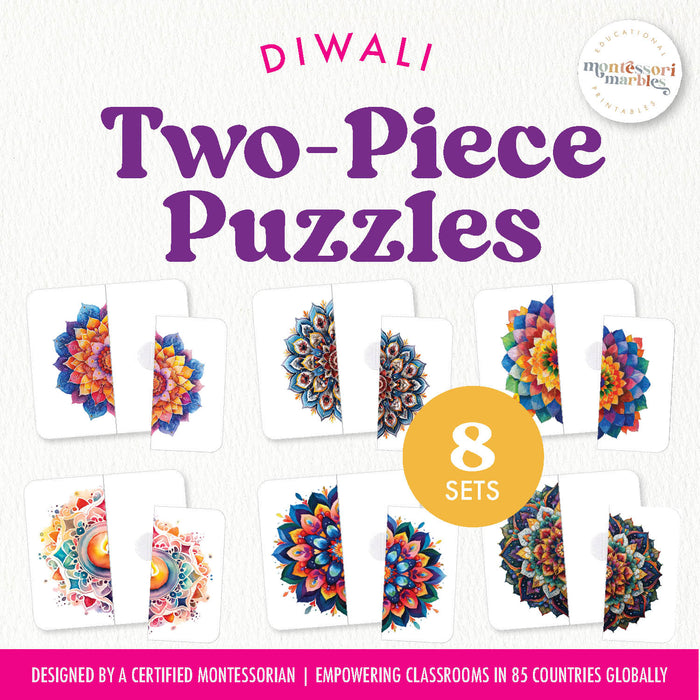
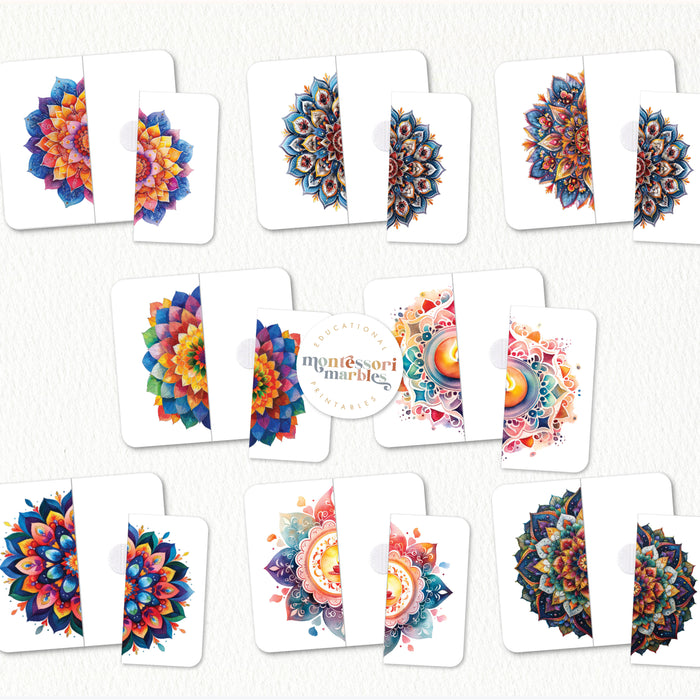
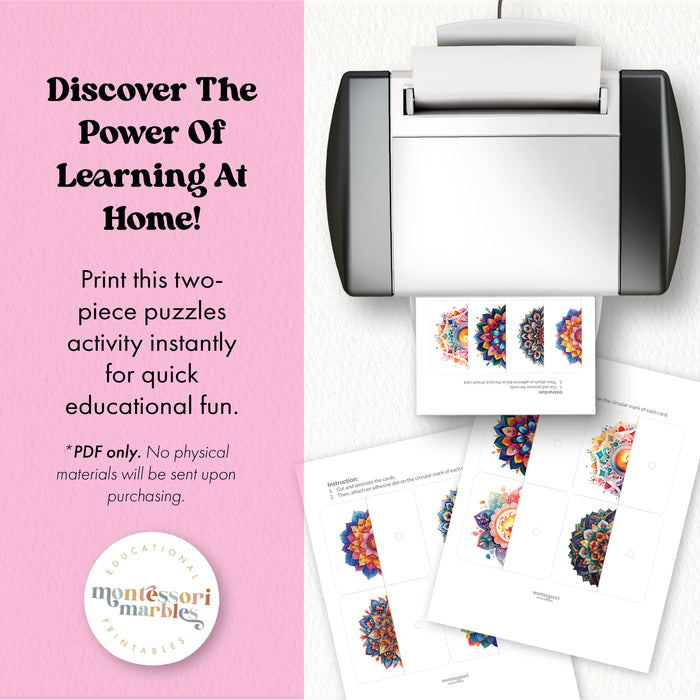
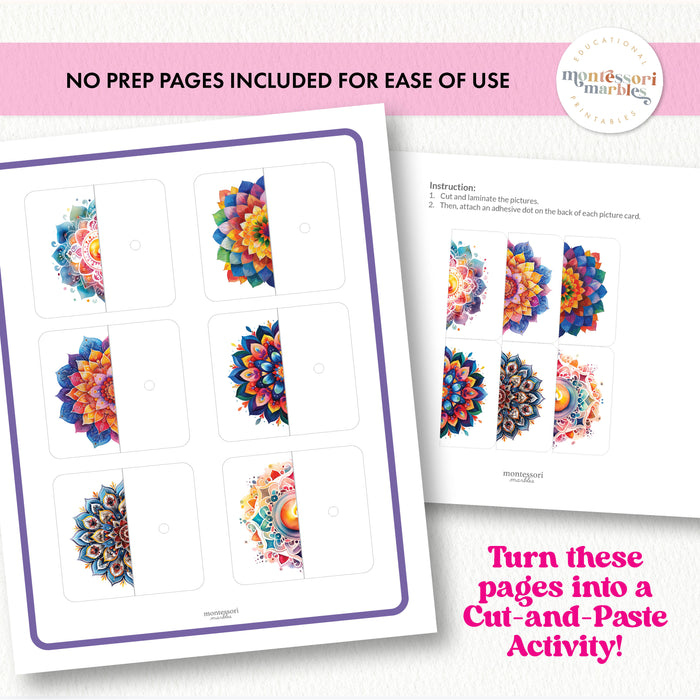
Experience traditional Indian art through these rangoli symmetry puzzles for children ages 3 to 6. Diwali, celebrated by Hindus, Jains, Sikhs, and Newar Buddhists during the Hindu month of Kartika, honors light triumphing over darkness. Eight two-piece puzzles featuring authentic rangoli patterns teach symmetry, visual discrimination, and cultural appreciation through hands-on matching.
📦 What's Included
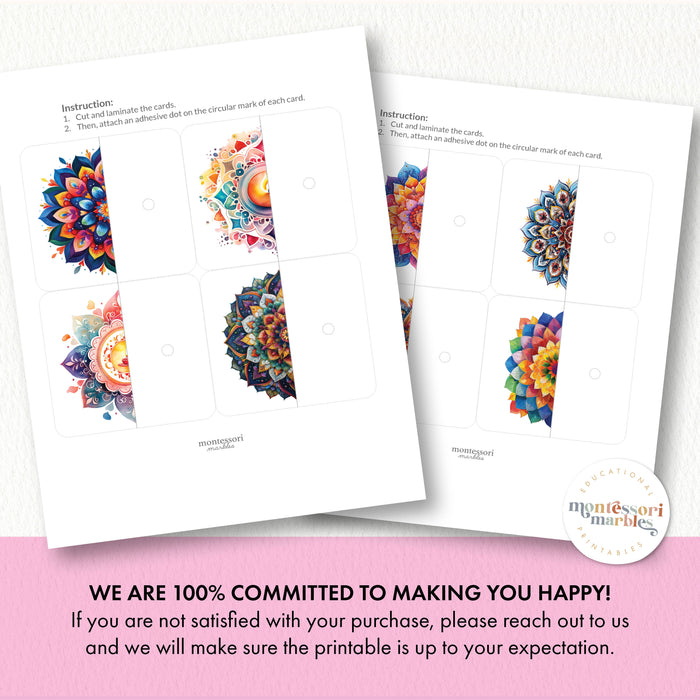
- 8 rangoli puzzle sets: 16 cards total featuring traditional Diwali floor art
- Symmetrical patterns: Authentic rangoli designs split vertically
- Colorful traditional art: Vibrant geometric patterns using traditional colors
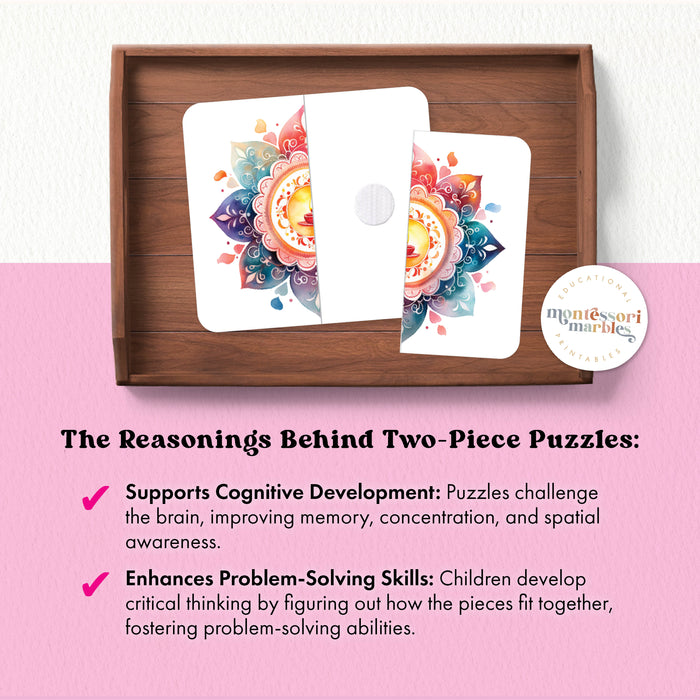
- Self-correcting format: Visual symmetry provides independent error checking
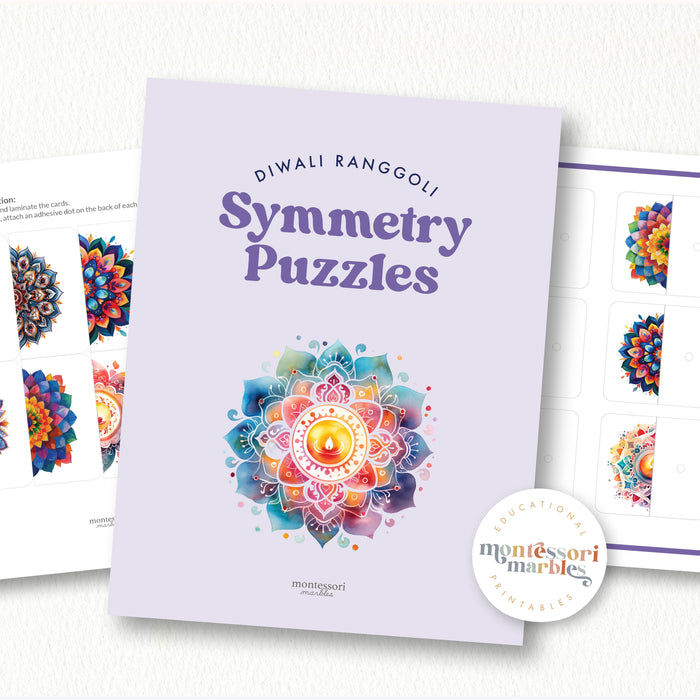
- 3 pages total: Compact cultural learning resource
💡 Learning Benefits
- Symmetry recognition and understanding bilateral balance
- Visual discrimination, noticing pattern details for accurate matching
- Spatial reasoning, completing geometric designs
- Cultural awareness learning about Hindu festival art traditions
- Fine motor coordination, placing puzzle pieces precisely
- Pattern understanding, recognizing geometric relationships
🎯 How to Use
- Children match rangoli halves to complete symmetrical patterns
- Discuss how rangoli patterns welcome prosperity and deities during Diwali
- Perfect for October or November cultural units during the Diwali season
- Use during geometry or symmetry lessons with cultural context
- Extension: Children create their own symmetrical rangoli designs with colored paper or chalk
- Display completed puzzles alongside student-created rangoli art
🎨 What Is Rangoli?
Rangoli is a traditional Indian floor art created at doorsteps during Diwali and other celebrations. Families use colored powder, rice, flower petals, or colored sand to create intricate geometric patterns symbolizing joy, prosperity, and welcome. These temporary artworks are made fresh each day and swept away, representing the impermanence of earthly things. Rangoli designs follow mathematical principles of symmetry, often featuring mandalas, lotus motifs, and geometric patterns passed through generations.
🌺 Teaching Tip from a Montessori Guide
Rangoli puzzles teach mathematical concepts through cultural art. When children complete symmetrical patterns, they're learning geometry principles used in architecture, nature, and traditional crafts worldwide. This connection between math and culture shows children that abstract concepts have real-world applications across human societies. Hands-on symmetry work with beautiful rangoli designs builds a stronger understanding than worksheet exercises because children see mathematics creating beauty.
