
Desert Animals Flash Cards
Digital Download
Enjoy instant access to your Montessori printables. This is a digital product - no physical items will be shipped.
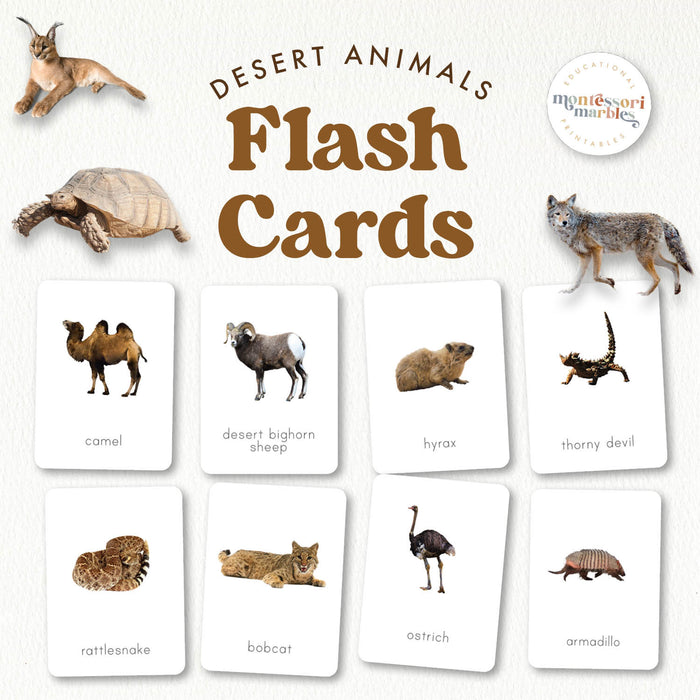
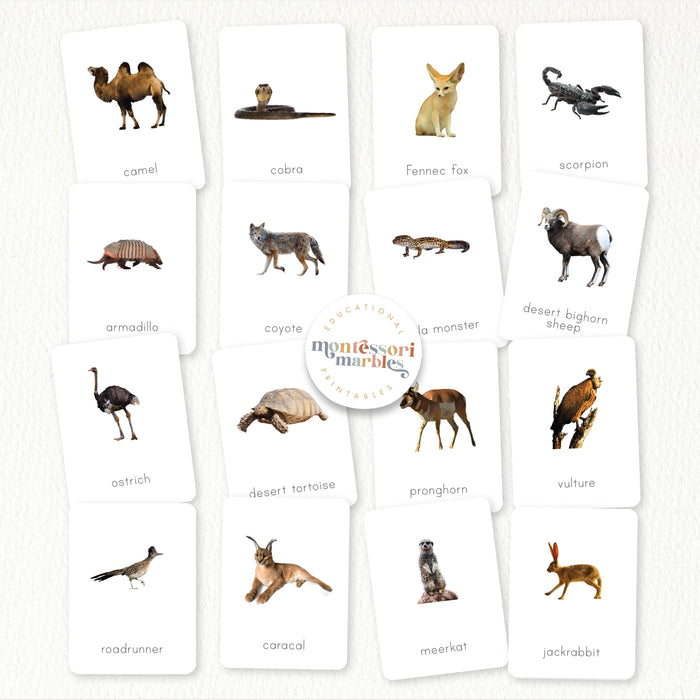
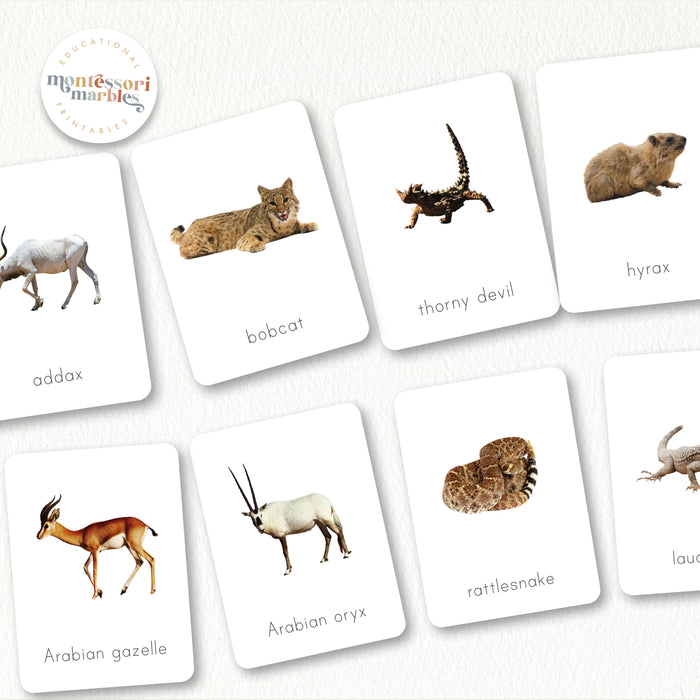
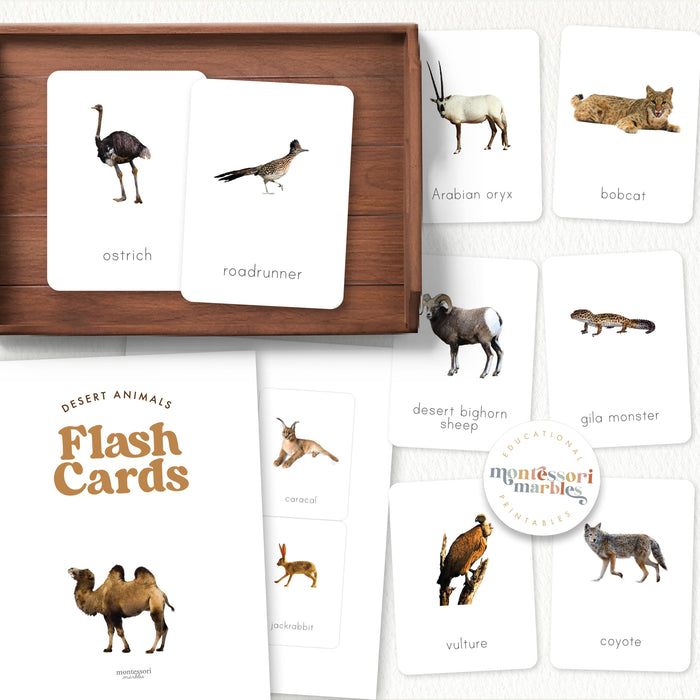
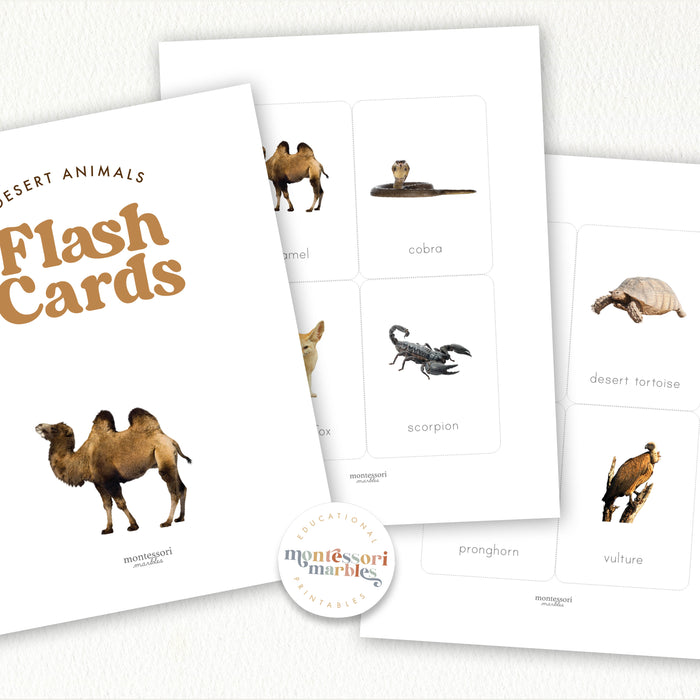
Introduce desert habitat animals with these real photo flash cards for children ages 4 to 7. Twenty-four cards featuring creatures from desert biomes worldwide teach adaptation, survival strategies, and biodiversity through engaging wildlife imagery.
📦 What's Included
- 24 desert animal cards: Diverse species from global deserts
- Real photographs: Authentic wildlife images showing natural habitats
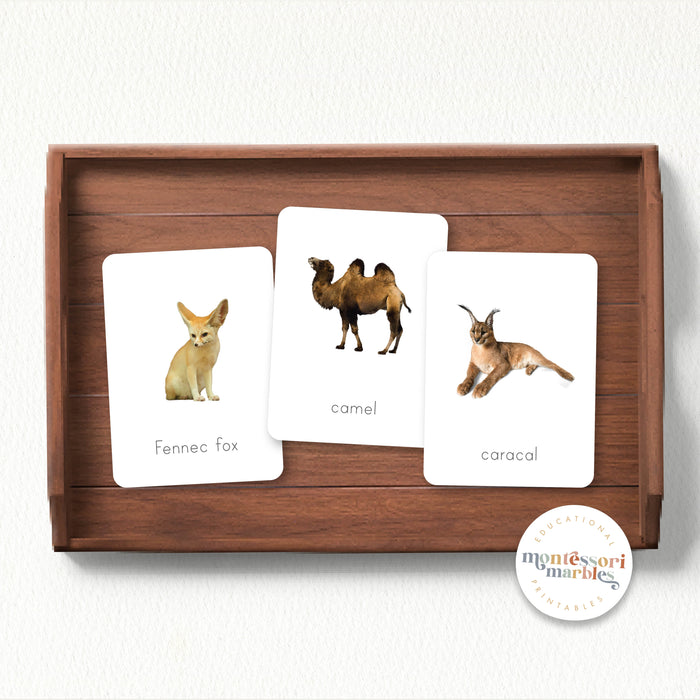
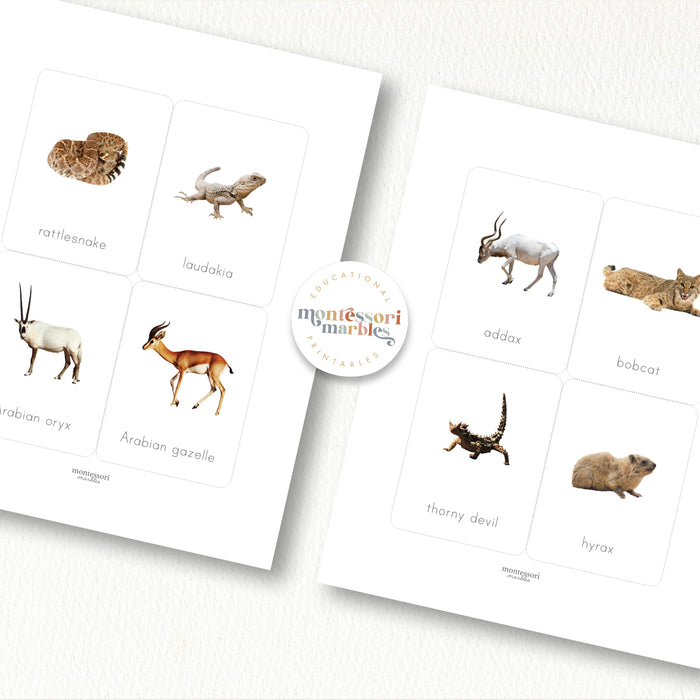
- Animals included: Camel, scorpion, rattlesnake, coyote, roadrunner, desert tortoise, bighorn sheep, pronghorn, thorny devil, Gila monster, vulture, ostrich, caracal, and more
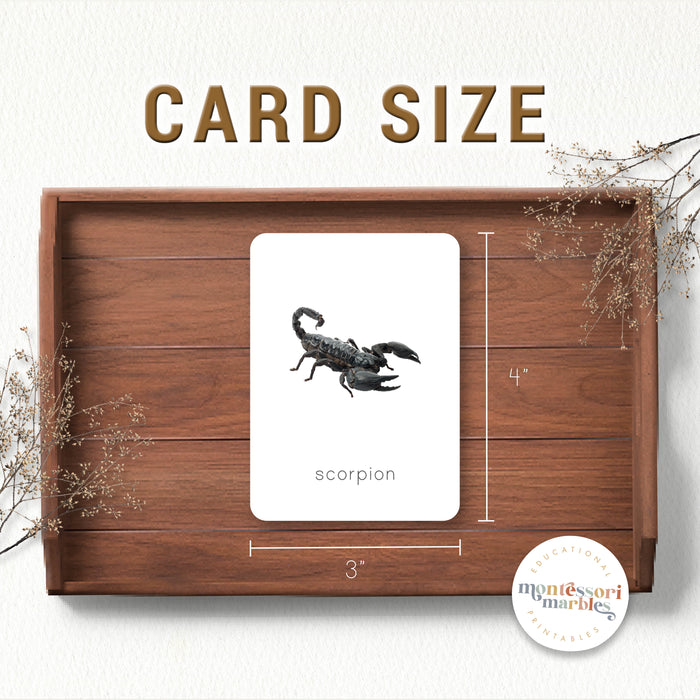
- Card size: 3 inches by 4 inches
- 6 pages total: Efficient printing layout
- Global representation: Desert animals from multiple continents
💡 Learning Benefits
- Habitat understanding learning desert biome characteristics
- Animal vocabulary building specific creature names
- Adaptation awareness recognizing survival strategies
- Biodiversity appreciation seeing desert ecosystem variety
- Geographic knowledge connecting animals to desert regions
- Classification skills grouping animals by characteristics
🎯 How to Use
- Introduce during biome or habitat studies
- Children sort animals by continent or desert type
- Discuss adaptations: how animals survive heat and water scarcity
- Perfect for geography units on arid regions
- Compare desert animals to rainforest or polar animals
- Extension: Research one desert animal in depth
🌵 Teaching Tip from a Montessori Guide
Desert animals fascinate children because extreme adaptations are visible and dramatic. A camel's hump stores fat for energy, a Gila monster's bumpy skin reduces water loss, a roadrunner's speed helps it hunt scorpions. When children study desert creatures, they're learning that animals evolve specific features matching their environment. This concrete observation builds foundation for abstract evolutionary concepts later.
