
Parts of a Bee Nomenclature Cards
Digital Download
Enjoy instant access to your Montessori printables. This is a digital product - no physical items will be shipped.
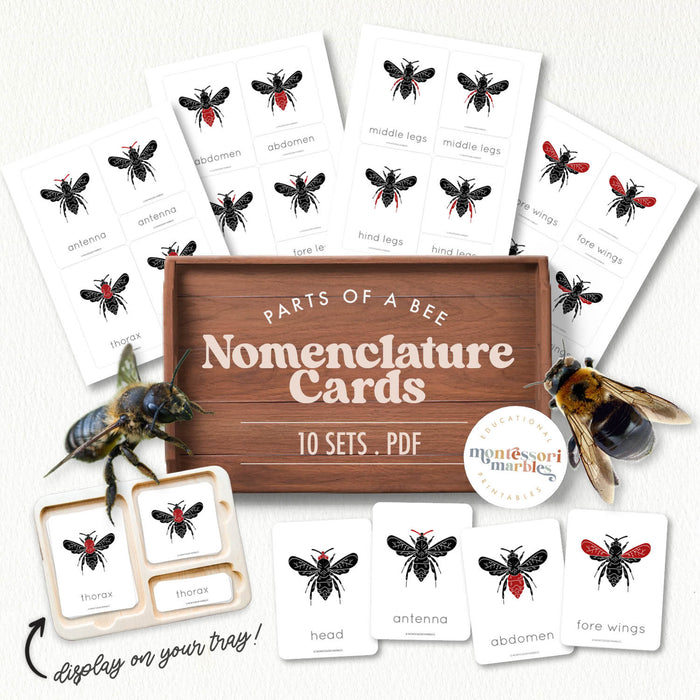
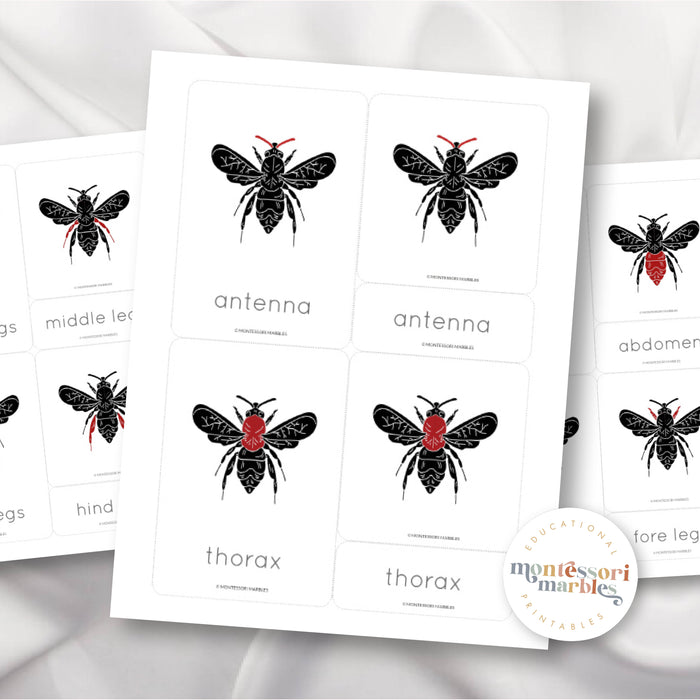
Help young entomologists understand the anatomy of one of nature's most important pollinators with this printable PDF set of 3-part nomenclature cards introducing ten essential bee body parts for ages 5 to 8. Students learn to identify and name key insect structures using the classic Montessori three-period lesson approach that builds vocabulary through visual matching, oral recognition, and independent recall.
📦 What's Included
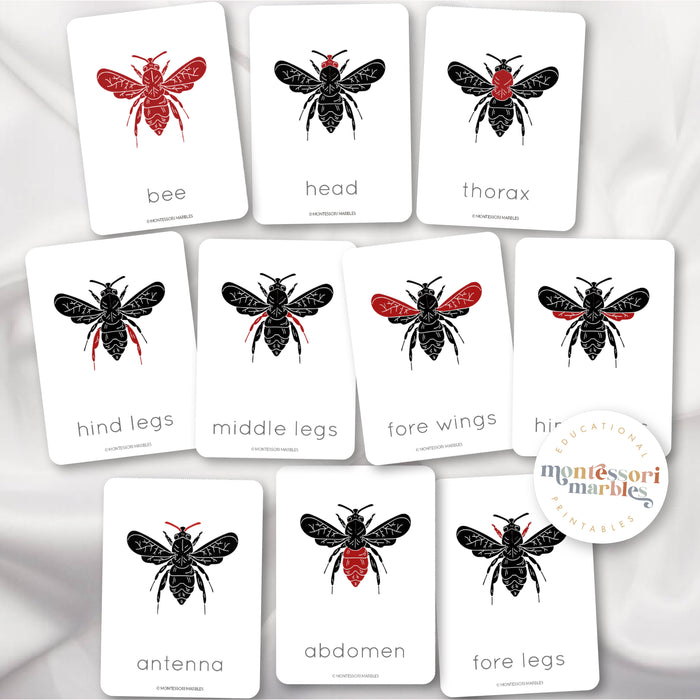
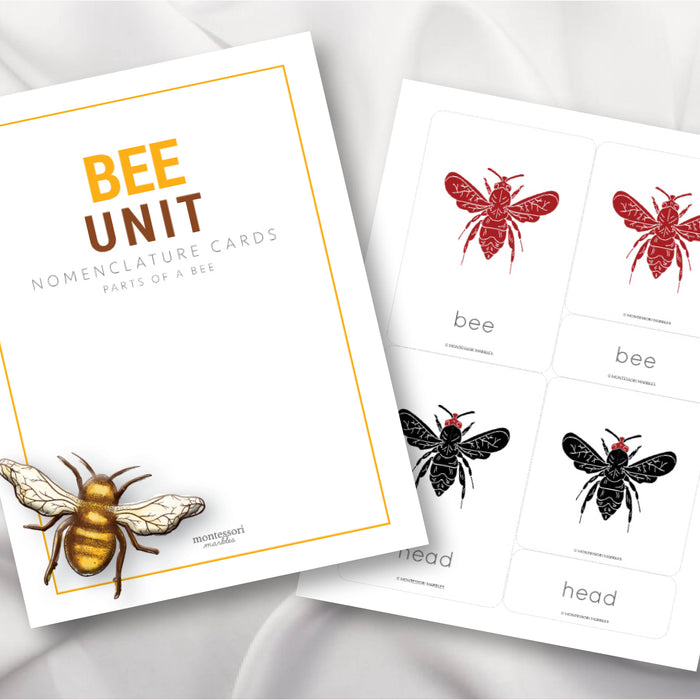
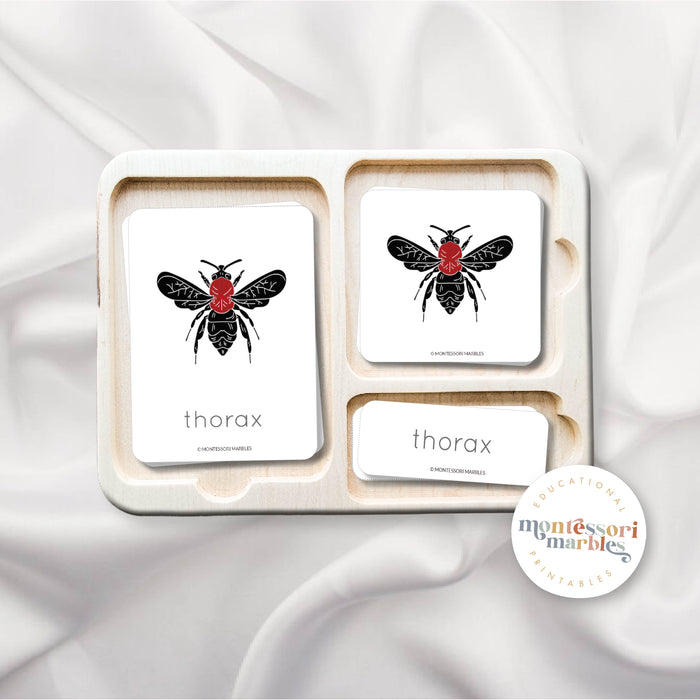
- 10 Complete Card Sets: Each body part includes picture card, label card, and control card (picture with integrated label)
- Bee Parts Featured: Head, antenna, thorax, abdomen, fore legs, middle legs, hind legs, fore wings, hind wings (9 body parts total)
- Control Card: Full bee diagram with all parts labeled for self-correction
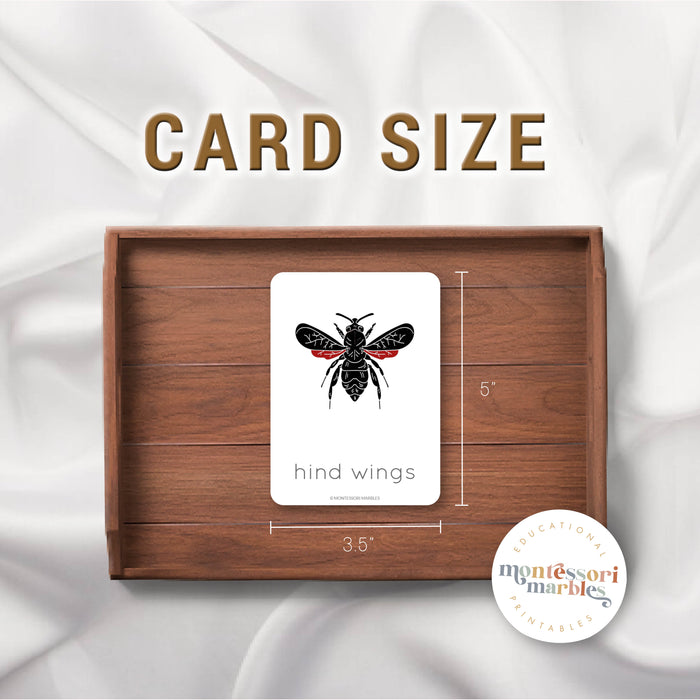
- Card Size: 3.5 x 5 inches, perfect for small hands
- 5 Total Pages
💡 How 3-Part Cards Build Scientific Vocabulary
- Picture cards establish visual recognition of each body part before introducing terminology
- Separate labels allow matching practice for pre-readers and emerging readers
- Control cards provide self-correction so students can work independently without adult confirmation
- Precise anatomical terms like thorax and abdomen introduce scientific language naturally
- Distinguishing between fore, middle, and hind legs develops careful observation skills
- Hands-on matching builds kinesthetic memory alongside visual and verbal learning
🎯 How to Present These Cards
- Begin with a three-period lesson introducing 2-3 body parts at a time rather than all nine at once
- First period: Show picture cards and say "This is the head. This is the thorax." (naming)
- Second period: Ask "Can you show me the antenna? Can you point to the abdomen?" (recognition)
- Third period: Point to cards and ask "What is this?" for independent recall
- Once students know the terminology, introduce the matching work with separate picture and label cards
- Place control card nearby so students can check their own work after matching all parts
🍂 Connecting to Pollination Studies
Understanding bee anatomy deepens appreciation for how bees pollinate plants. The hind legs collect pollen, antennae sense flower scents, and wings provide flight between flowers. This anatomical knowledge transforms simple bee observation into meaningful ecosystem study, perfect for spring nature units, garden lessons, or Earth Day activities.
🎓 Teaching Tip from a Montessori Guide
Start with the three main body sections that all insects share: head, thorax, and abdomen. Once students confidently identify these core structures, add the legs (explaining fore, middle, and hind positions), then introduce wings and antennae last. This layered approach mirrors how students learn insect classification, building from general to specific anatomy.
📄 Technical Details
This is a digital download delivered instantly as a PDF file. Print on cardstock and laminate for durability during repeated matching work. Cards are sized at 3.5 x 5 inches for easy handling. No physical product will be shipped.
🔗 Continue Your Bee Studies
- Complete Bees Collection for more bee-themed activities
- Insects Collection for comparative insect anatomy
- All Nomenclature Cards for building scientific vocabulary across subjects
