
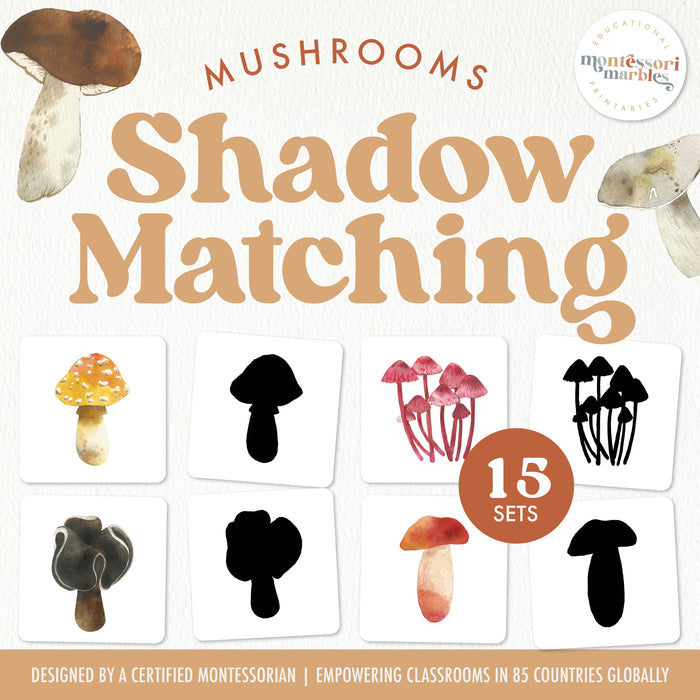


Mushrooms & Fungi Shadow Matching
Digital Download
Enjoy instant access to your Montessori printables. This is a digital product - no physical items will be shipped.
Children developing visual discrimination skills benefit from activities that isolate shape recognition. These mushroom shadow matching cards are printable PDF activities designed for ages 3 to 6, featuring 15 watercolor mushroom illustrations that children match to corresponding black silhouettes by identifying shape outlines.
📦 What's Included
- 15 matching sets: Each set contains one color mushroom card and one black shadow card
- 5 print pages: Mix of color images and shadow silhouettes
- Watercolor illustrations: Clear mushroom shapes with distinct outlines
💡 How to Use
Print on cardstock and laminate for durability. Cut out the mushroom cards and shadow cards separately. Place shadow cards in a row and give children the color mushroom cards to match. Children identify which shadow corresponds to each color mushroom by comparing cap shape, stem width, and overall outline. This activity builds the shape discrimination skills needed for visual memory work and later geometry.
🍄 Why Shadow Matching Matters
Shadow matching isolates shape recognition from color and detail, forcing children to focus specifically on outlines and silhouettes. This strengthens visual discrimination abilities used in reading (distinguishing b from d, p from q), math (recognizing shape properties), and spatial reasoning. Working with natural forms like mushrooms provides irregular shapes that are more challenging than geometric forms.
📚 Skills Developed
- Visual discrimination and shape recognition
- Silhouette and outline identification
- Observation and comparison skills
- Spatial reasoning
- Foundation for letter and number recognition
🔗 Build Complete Visual Skills
- Mushroom Activity Workbook — Combine shadow matching with tracing, counting, and sequencing activities
- All Mushroom Materials — Add nomenclature cards, flash cards, and cutting strips for comprehensive fungi study
