
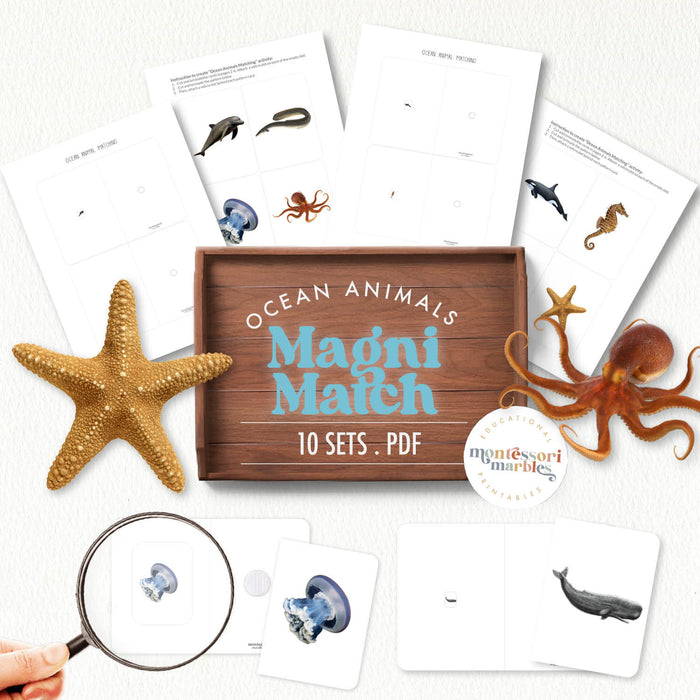
Ocean Animals Magni Match
Digital Download
Enjoy instant access to your Montessori printables. This is a digital product - no physical items will be shipped.
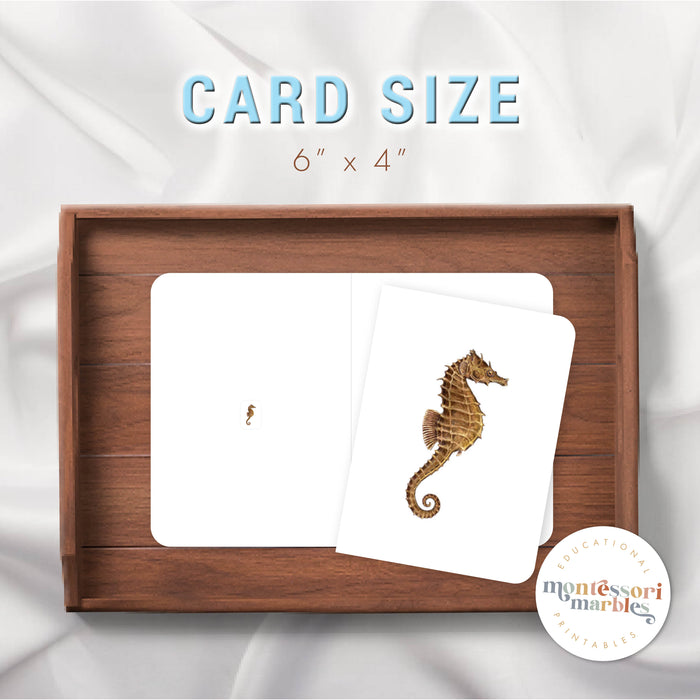
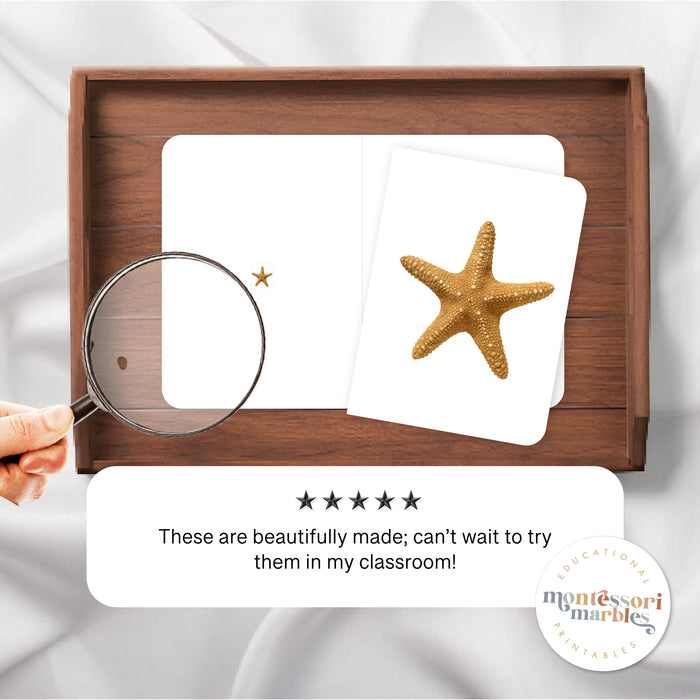
Build advanced visual discrimination and attention to detail with this printable PDF Magni-Match activity for ages 4 to 7. Students match magnified close-up views of ocean animal features (scales, tentacles, fins, patterns) to complete whole animal images, developing the part-to-whole thinking and careful observation skills essential for scientific inquiry and classification work.
📦 What's Included
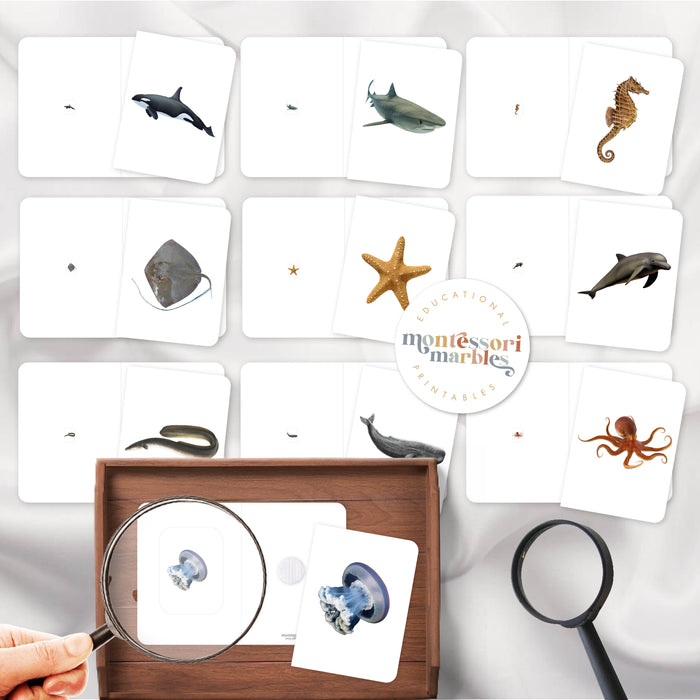
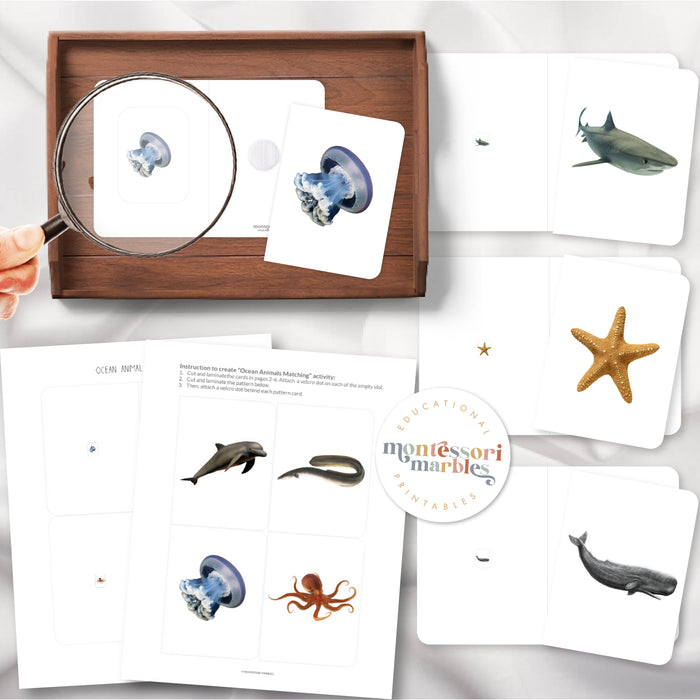
- 10 Matching Sets: Each set includes one magnified detail card and one whole animal card
- Close-Up Details Featured: Zoomed-in views of distinctive features like whale flukes, octopus suckers, shark teeth, dolphin skin patterns, seahorse segments, and more
- Ocean Creatures: Whale, orca, shark, dolphin, octopus, stingray, eel, jellyfish, starfish, seahorse
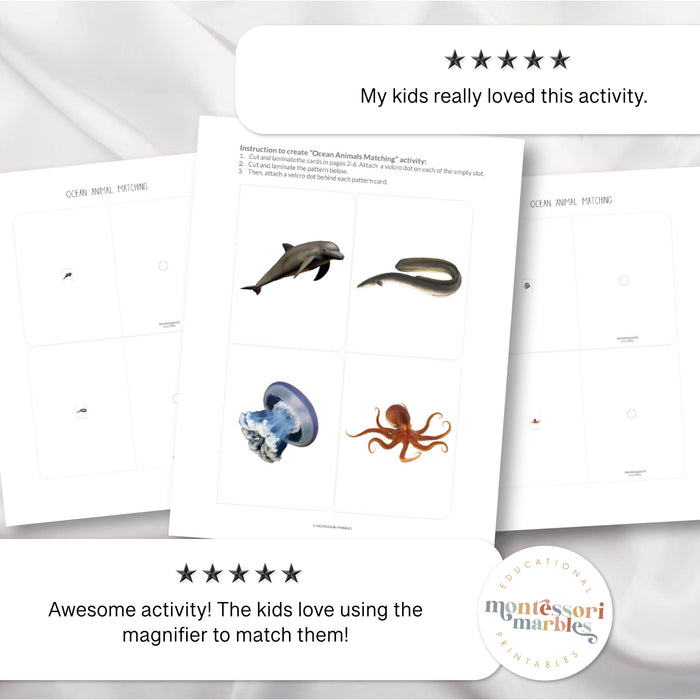
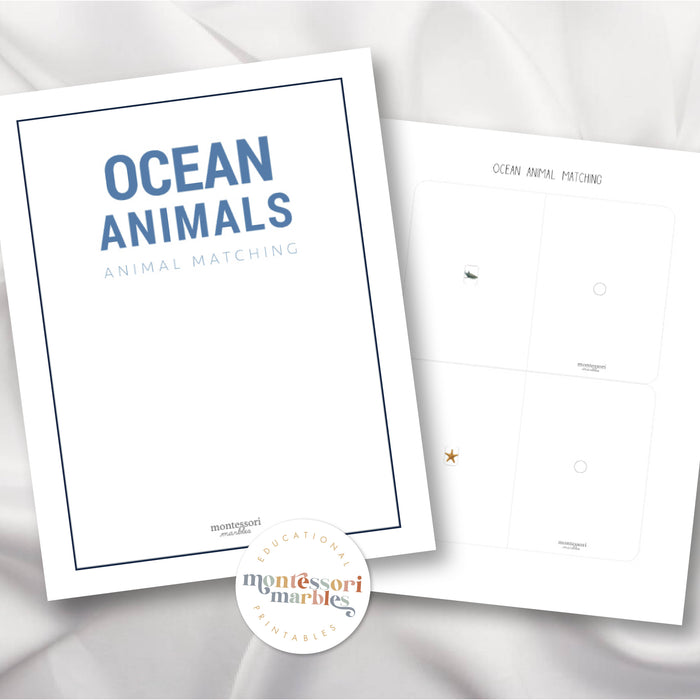
- 8 Total Pages to print and cut
💡 Learning Benefits
- Develop attention to detail by studying small features and textures
- Practice part-to-whole reasoning by connecting close-up details to complete animals
- Build scientific observation skills through careful examination of animal characteristics
- Strengthen visual memory by recalling which details belong to which creatures
- Learn to identify ocean animals by distinctive physical features rather than overall shape
🎯 How to Use
- Present on a sensorial shelf as challenging independent matching work
- Use during ocean-themed units to deepen understanding of animal characteristics
- Encourage students to explain WHY each detail matches its animal (building reasoning skills)
- Pair with actual magnifying glasses for hands-on observation of printed textures and patterns
- Introduce after students have mastered simpler matching activities like shadow matching
🔍 Why Magni-Match is Different
Unlike simple duplicate matching where students pair identical images, Magni-Match requires part-to-whole thinking. Children must study magnified details (the texture of shark skin, the pattern of starfish arms, the structure of octopus suckers) and mentally connect these close-ups to the larger animal. This mirrors the observation skills scientists use when identifying specimens, examining evidence, or classifying organisms by distinctive features.
🔗 Build Your Visual Skills Library
- Ocean Animals Collection for more marine life activities and studies
- Magni-Match Collection for detail-matching activities in other themes
