
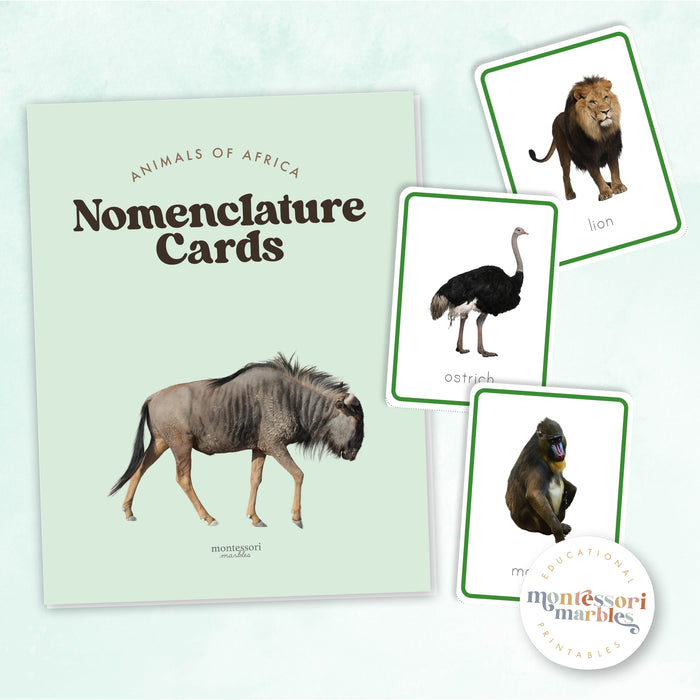
Animals of Africa Nomenclature Cards
Original price
$4.95
-
Original price
$4.95
Original price
$4.95
$4.95
-
$4.95
Current price
$4.95
Digital Download
Enjoy instant access to your Montessori printables. This is a digital product - no physical items will be shipped.
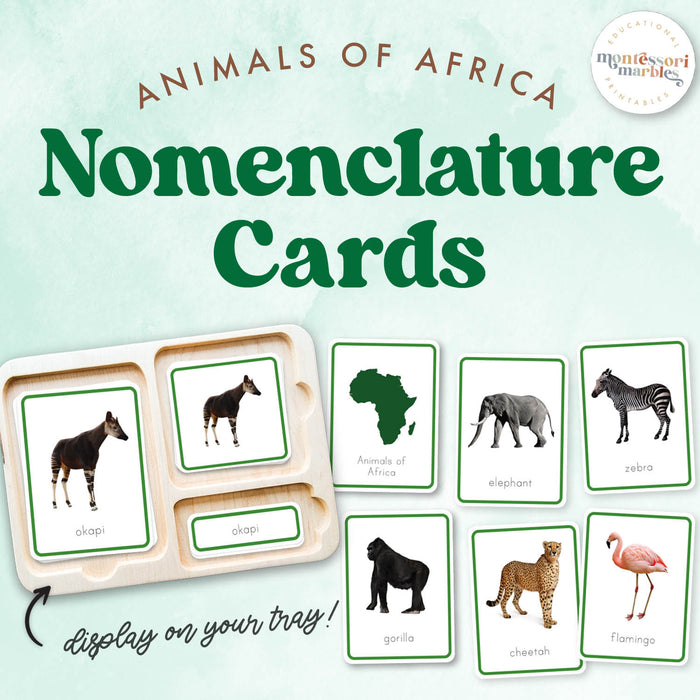
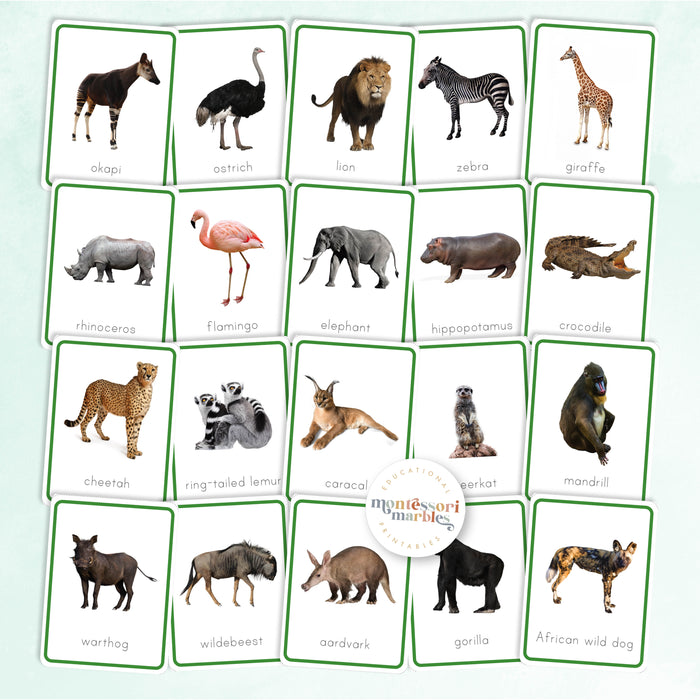
Children ages 3–8 learn African wildlife vocabulary with these 20-set nomenclature cards, a printable PDF featuring real photos of lions, elephants, giraffes, and other safari animals for building vocabulary and geographic awareness through three-period lessons.
📦 What's Included
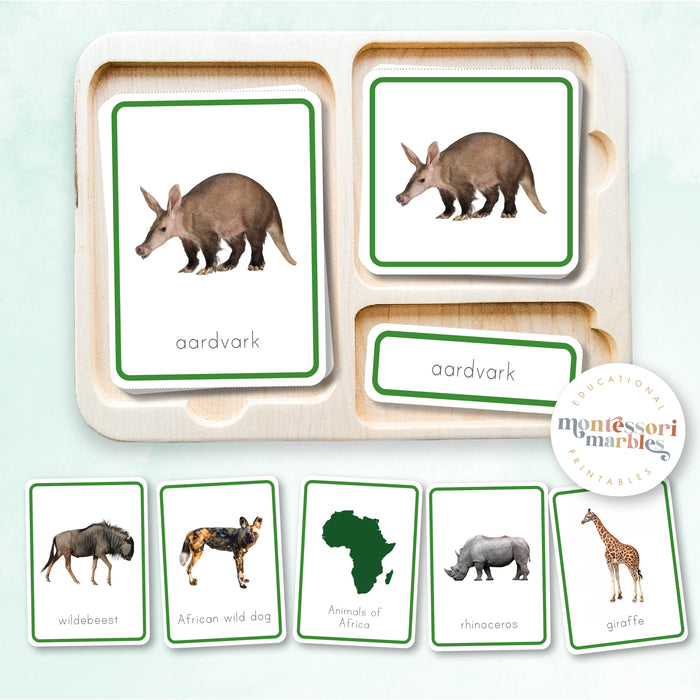
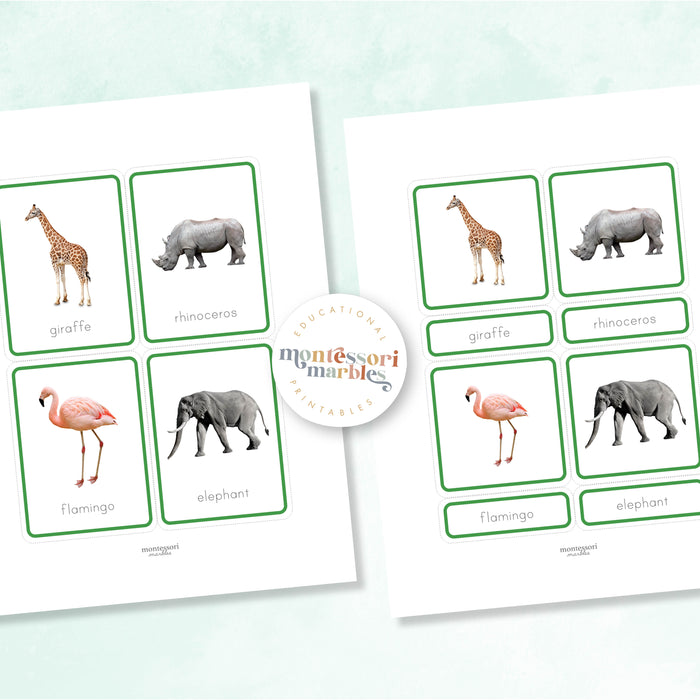
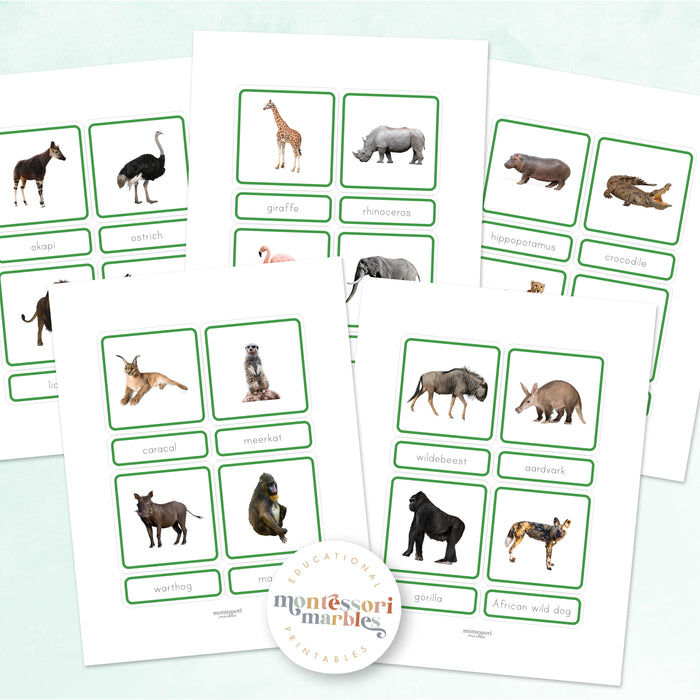
- 20 three-part card sets: Picture card, control card with image and label, and separate label card
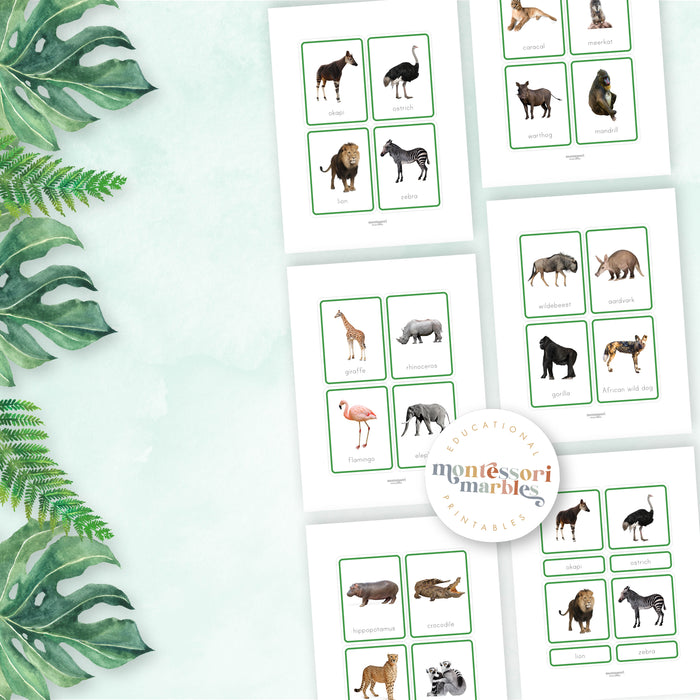
- 60 cards total: Complete set covering African continent wildlife
- Real photographs: High-quality images of actual animals in their habitats
- Animals featured: Lion, gorilla, giraffe, elephant, ostrich, mandrill, cheetah, hippopotamus, rhinoceros, flamingo, zebra, okapi, aardvark, African wild dog, ring-tailed lemur, meerkat, wildebeest, warthog, crocodile, caracal
- 6 pages: Ready to print on cardstock
💡 Learning Benefits
- African animal vocabulary and name recognition
- Geographic awareness of continent-specific wildlife
- Picture-to-word matching practice with control of error
- Independent learning through self-checking control cards
- Foundation for zoology and habitat studies
🎯 How to Use
- Present using the three-period lesson: naming, recognizing, and recalling animal names
- Start with 3–5 familiar animals before introducing lesser-known species
- Use picture cards alone first, then add labels once children know several animals
- Encourage children to match labels independently using control cards for checking
- Pair with globe or Africa puzzle map to show where animals live
- Store in a labeled basket on a geography or zoology shelf
🦁 Teaching Tip from a Montessori Guide
Use these cards after children have explored Africa on the globe or continent maps. Connecting animal names to a specific place on Earth makes the vocabulary feel purposeful rather than random.
🔗 Pair This With
- Safari Animals Flash Cards – Reinforce vocabulary with additional African wildlife
- Animals and Continents Sorting Cards – Sort African animals from other continents
- Safari Animals Workbook – Add hands-on activities to the Africa theme
