
Easter Egg Two-Piece Puzzles
Digital Download
Enjoy instant access to your Montessori printables. This is a digital product - no physical items will be shipped.
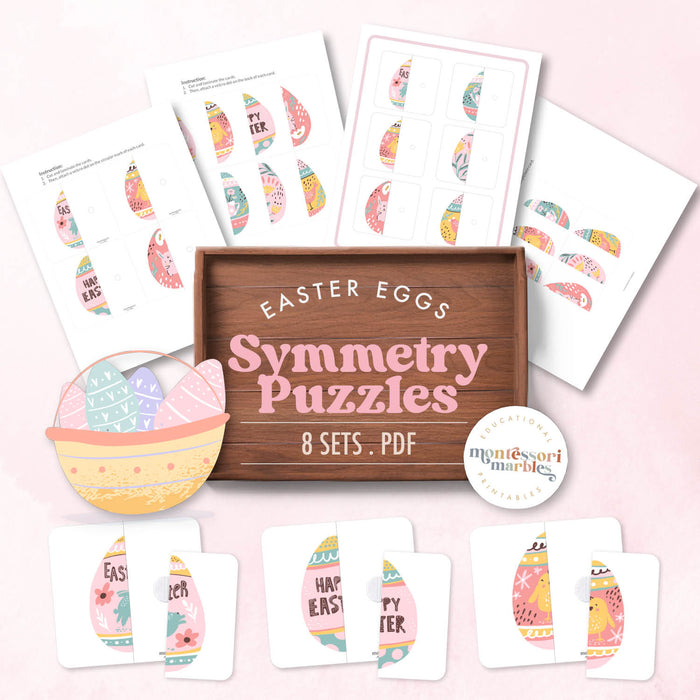
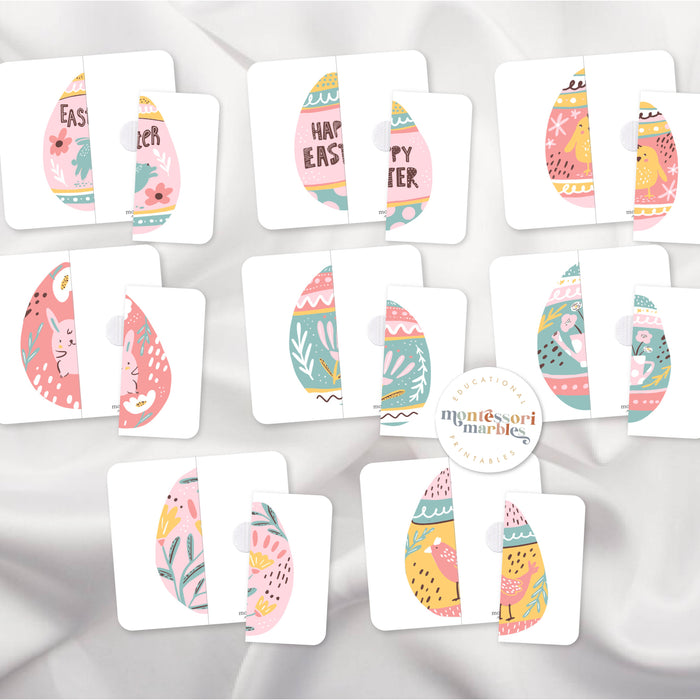
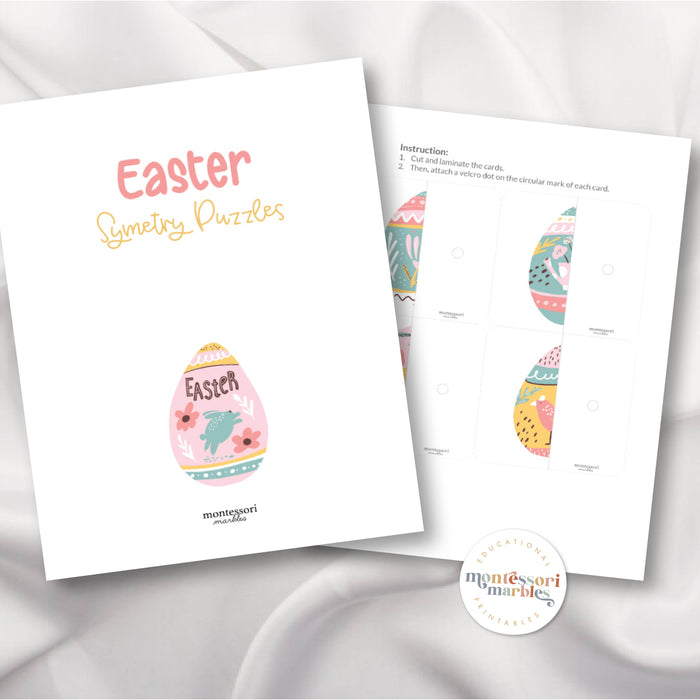
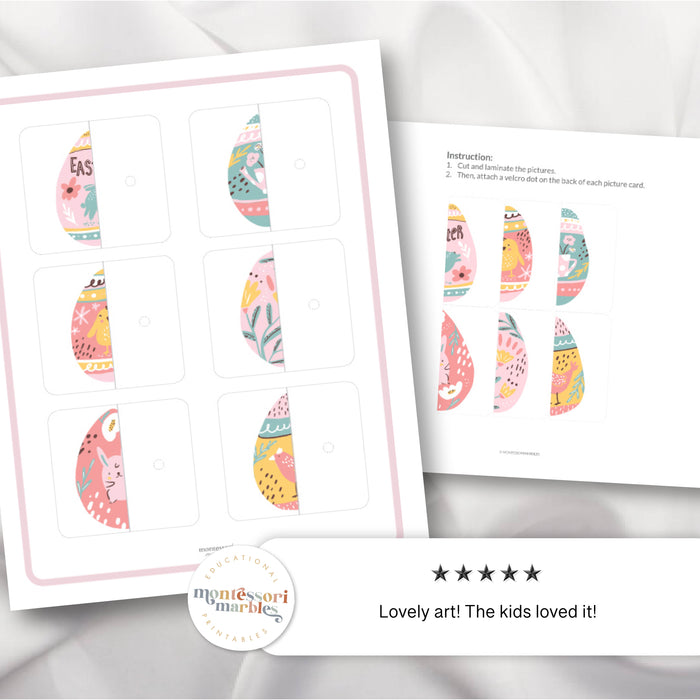
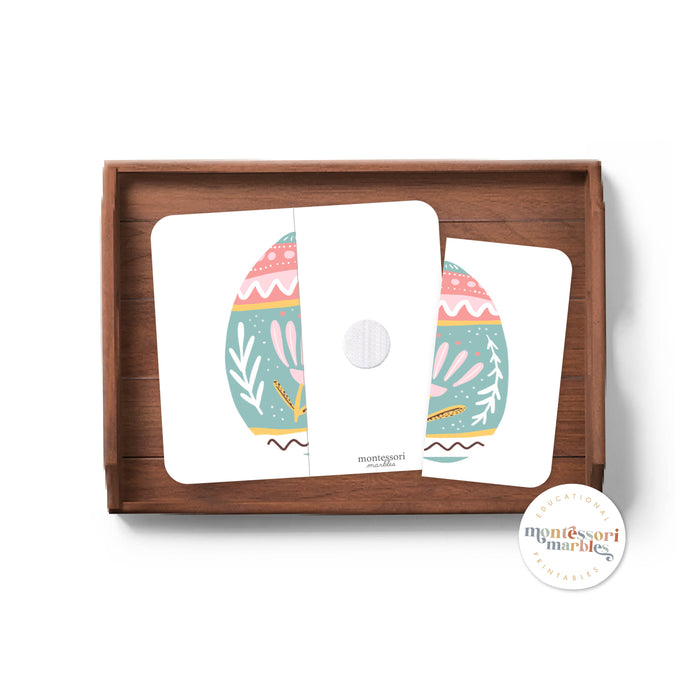
Develop visual discrimination and symmetry understanding with these Easter egg two-piece puzzles for children ages 3 to 5. This printable PDF features eight decorated eggs split vertically down the middle, challenging children to complete colorful spring patterns while building problem-solving skills and pattern recognition through hands-on puzzle assembly.
📦 What's Included
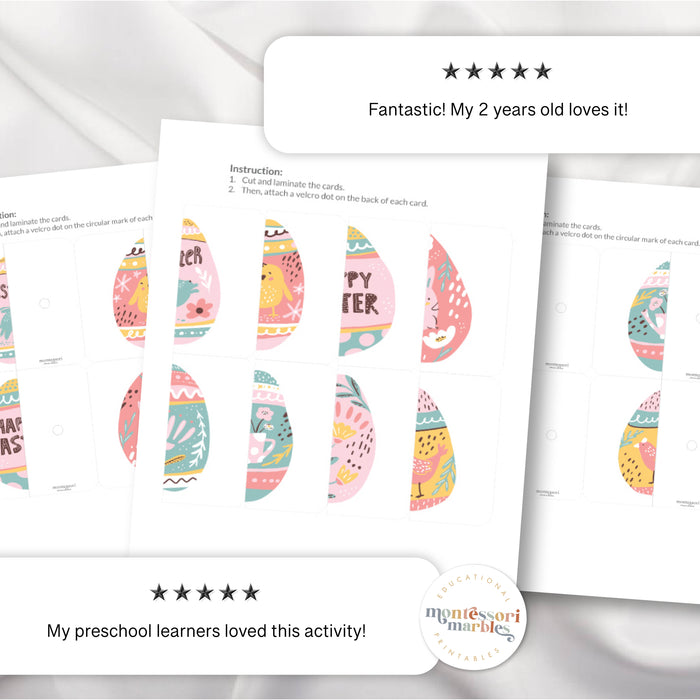
- 8 two-piece puzzle sets: 16 cards total with decorated Easter eggs
- Colorful patterns: Stripes, polka dots, florals, geometric designs, spring pastels
- Symmetrical split: Each egg divided vertically for matching practice
- Self-correcting format: Halves only match correct partners
- Doodle-style artwork: Charming hand-drawn Easter egg designs
💡 Learning Benefits
- Visual discrimination matching egg halves accurately by pattern details
- Symmetry recognition understanding how designs mirror across center lines
- Spatial reasoning seeing how parts form complete eggs
- Problem-solving determining which halves belong together
- Fine motor coordination placing cards together precisely
- Pattern awareness recognizing stripes, dots, and geometric arrangements
🎯 How to Use
- Children match split Easter egg halves to complete decorated patterns
- Start with fewer puzzle sets, gradually adding more as children master matching
- Perfect for March or April spring visual activities
- Discuss pattern types as children complete puzzles (stripes go one direction, polka dots are scattered circles, florals have petals)
- Use during independent work or partner puzzle activities
- Extension: Children create their own decorated egg patterns on paper
🥚 Teaching Tip from a Montessori Guide
Two-piece egg puzzles bridge simple matching to complex jigsaw assembly while introducing symmetry concepts. When children successfully complete split decorated eggs, they're practicing the same visual analysis needed for multi-piece puzzles, reading left-to-right scanning, and geometry symmetry understanding. Easter egg patterns offer rich visual complexity—stripes, dots, and florals require careful attention to orientation, spacing, and detail. Children who master two-piece egg puzzles at age three develop pattern recognition skills supporting math, reading, and spatial reasoning throughout elementary years.
