
Ocean Animals Two-Piece Puzzles
Digital Download
Enjoy instant access to your Montessori printables. This is a digital product - no physical items will be shipped.
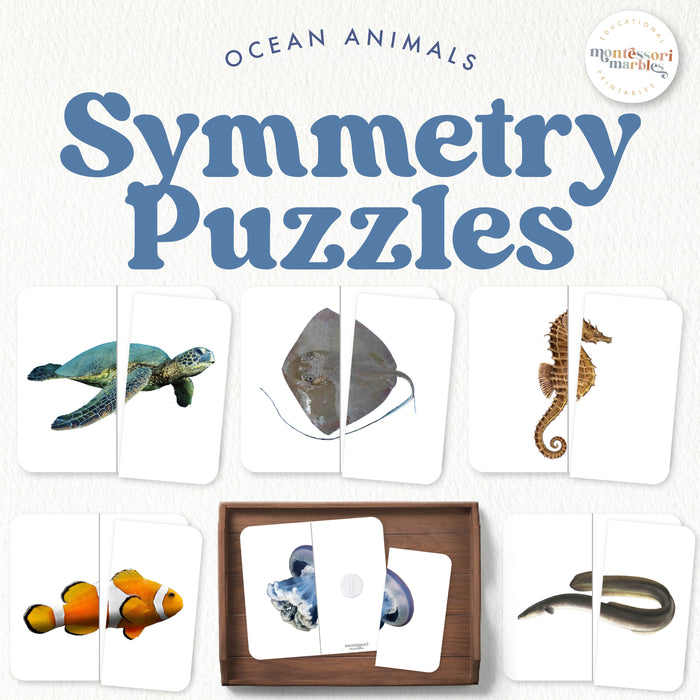
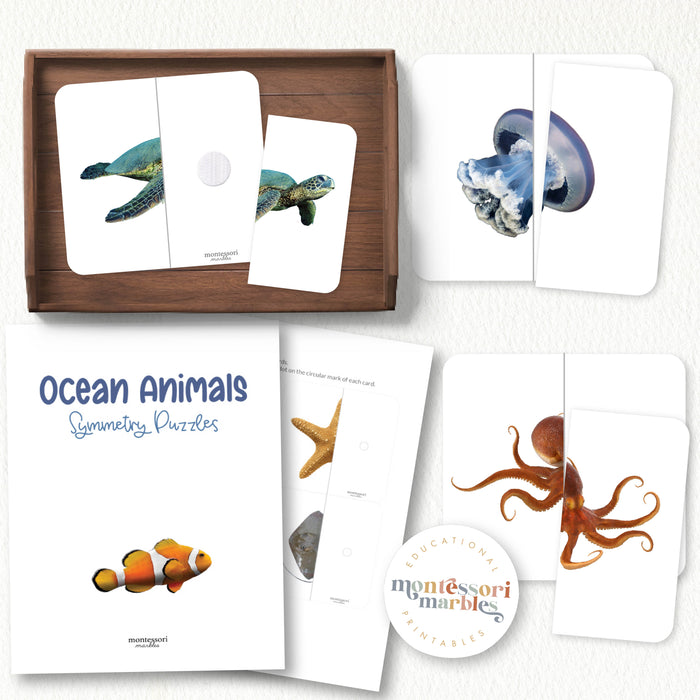
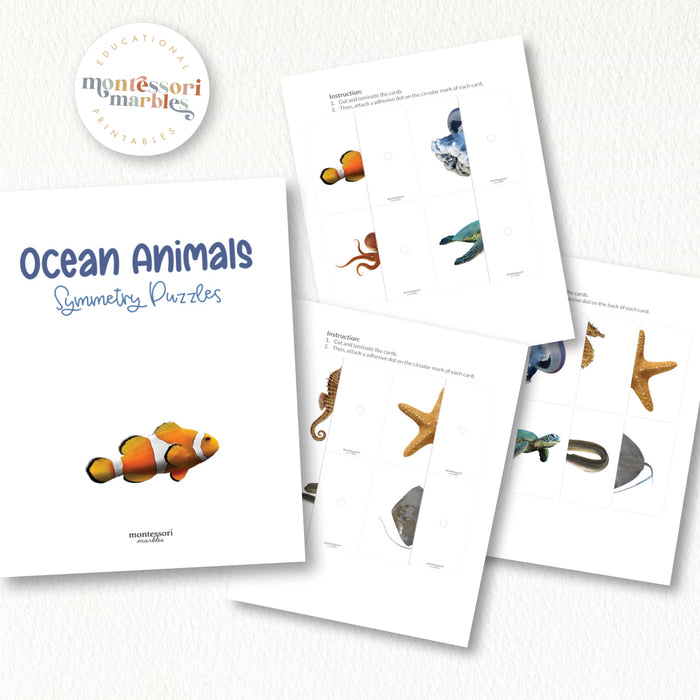
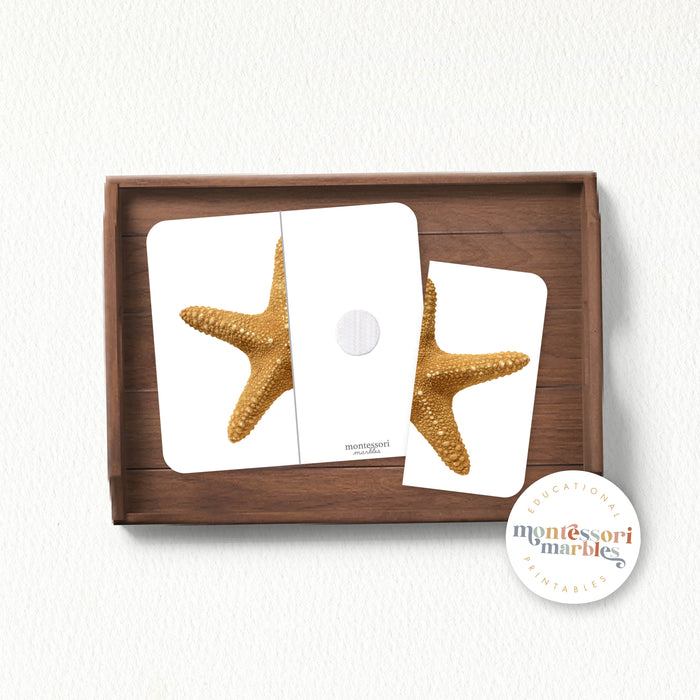
Introduce symmetry concepts through engaging ocean animals with this printable PDF two-piece puzzle set for ages 3 to 6. Students match mirror-image halves to complete eight sea creatures, building visual discrimination skills and spatial reasoning while exploring the mathematical concept of bilateral symmetry through hands-on puzzle solving that serves as a gentle introduction to more complex multi-piece puzzles.
📦 What's Included
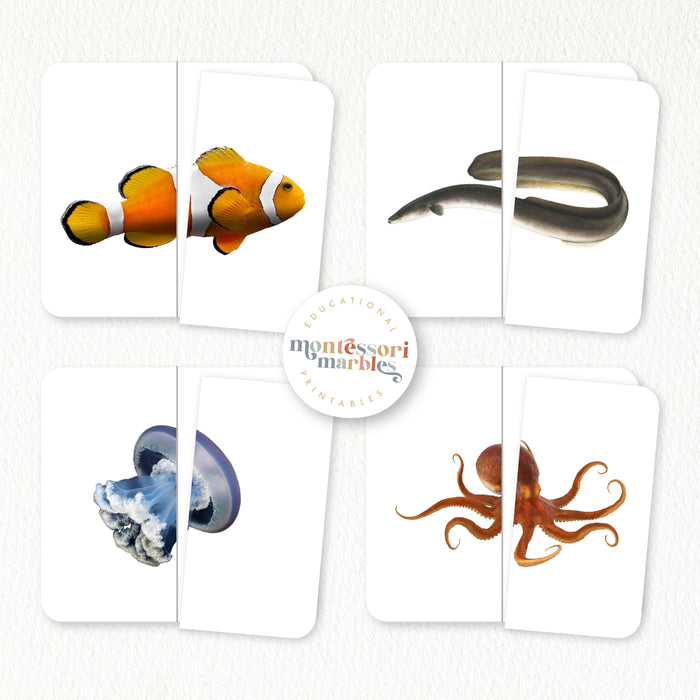
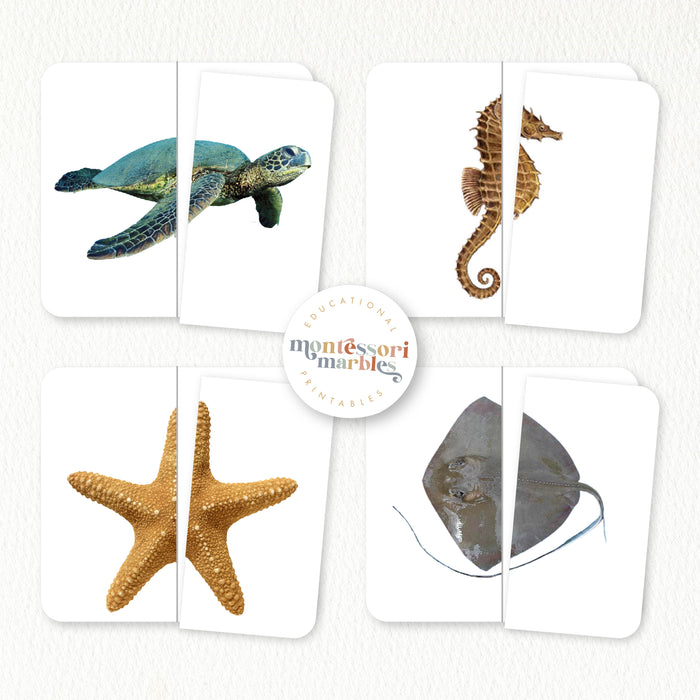
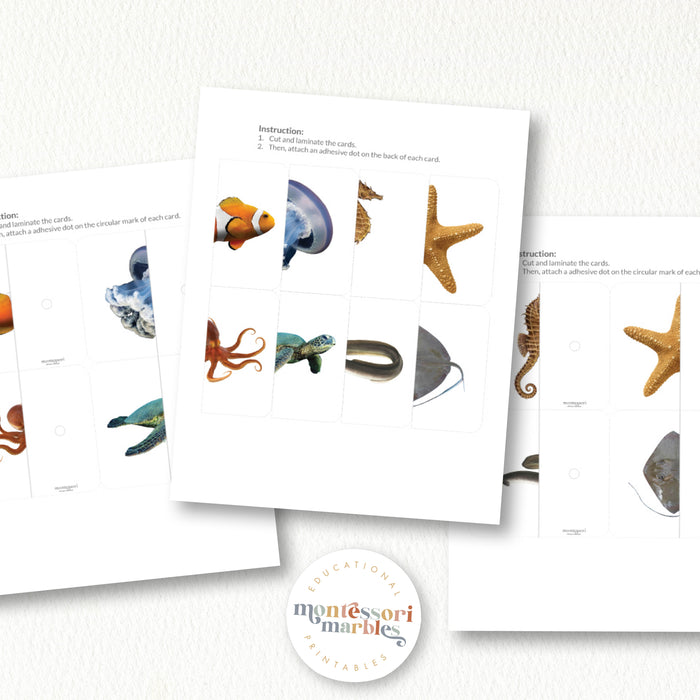
- 8 Symmetry Puzzles: Each ocean animal is split down the center line, creating two mirror-image pieces to match
- Ocean Creatures Featured: Dolphin, sea turtle, jellyfish, octopus, seahorse, fish, crab, and starfish
- 3 Total Pages to print and cut
💡 Learning Benefits
- Understand bilateral symmetry by matching left and right halves of each creature
- Develop visual discrimination through careful observation of matching patterns and colors
- Practice spatial reasoning and part-to-whole relationships essential for puzzle work
- Build fine motor skills and hand-eye coordination through precise matching and placement
- Recognize ocean animal characteristics while focusing on visual matching tasks
🎯 How to Use
- Present on a sensorial or practical life shelf as quiet independent work
- Use during ocean-themed units to reinforce marine animal recognition
- Store in a tray or basket for self-directed work students can repeat at their own pace
- Introduce before offering more complex multi-piece jigsaw puzzles
- Discuss the symmetry concept once students can easily match all eight puzzles
🐠 The Math Behind the Activity
While this looks like a simple matching activity, children are actually exploring bilateral symmetry, a foundational mathematical and scientific concept. By repeatedly matching mirror-image halves, they develop visual understanding that many animals (including humans) have symmetrical body plans. This early exposure builds geometric thinking that supports later work in math, art, and science.
🔗 Continue Your Ocean Studies
- Ocean Animals Collection for marine life studies and activities
- Visual Skills Collection for more sensorial and matching activities
